- Next with Noble
- Posts
- What’s Next With Noble: Wayfinding and Spatial Data
What’s Next With Noble: Wayfinding and Spatial Data
How spatial data transforms the way people move through public spaces, cities, and holiday crowds.


Fadila Prastawa & Paul McConnell
November 26, 2025
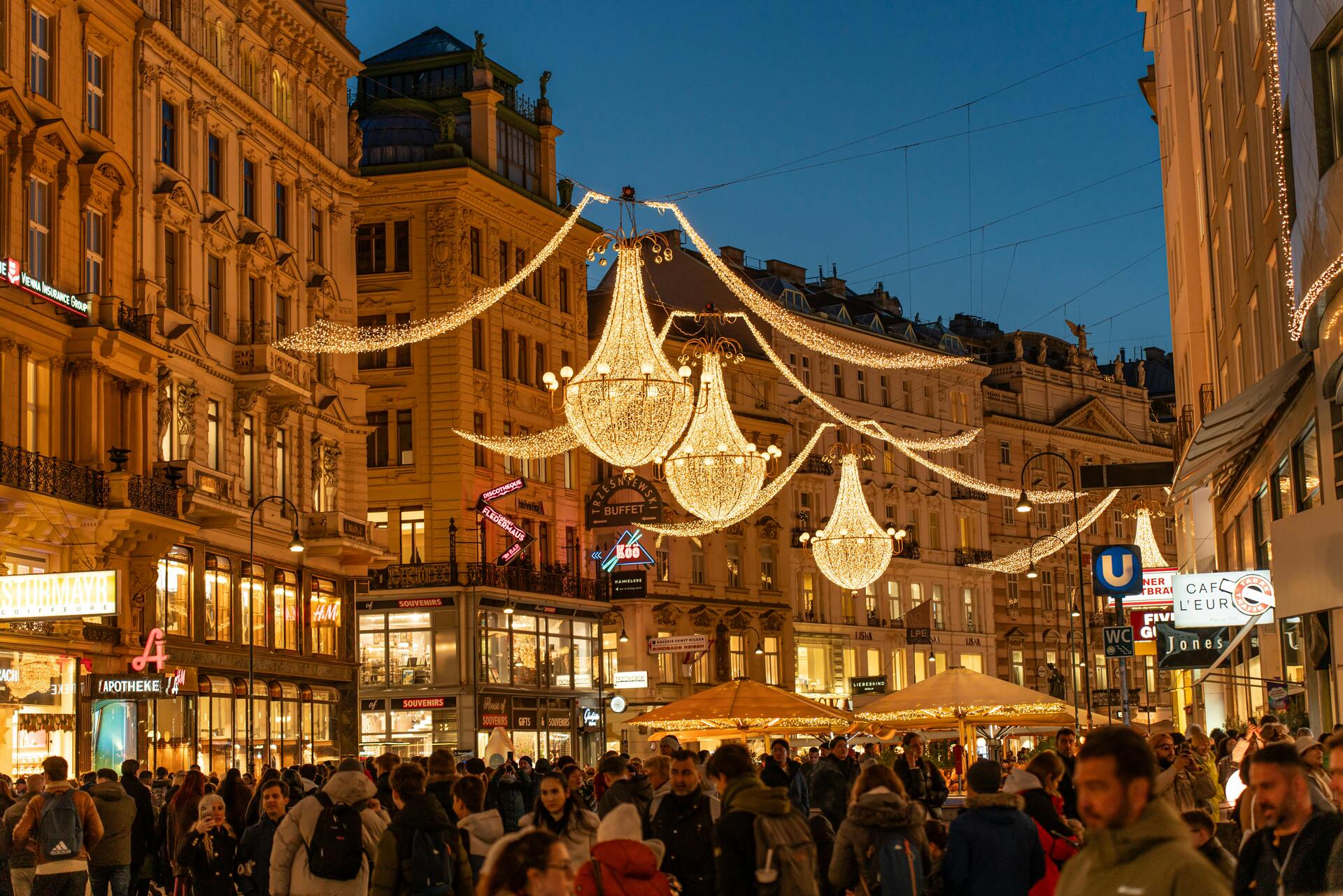
Photo: Vladimir Srajber / Vienna's Graben Street Lighting, Austria
The Lead: When Holiday Crowds Test The Limits of Our Spaces
Most people think of wayfinding (or wayshowing) as the thing that helps them get from A to B; the sign, the map, the arrow that keeps them on track. But inside complex environments, wayfinding is becoming something much bigger: a source of intelligence. Every movement, hesitation, cluster, and path taken (or avoided) generates a pattern. And when that pattern is captured as spatial data, it becomes an opportunity. In other words, modern wayfinding isn’t just about signage. It’s a feedback loop, one that helps spaces guide people in the moment and plan smarter for what comes next.
Holiday, or peak, crowds just make those patterns more defined. With more people moving, you can spot effective flow or congestion. Along with satisfaction or confusion.
When spatial data becomes part of the navigation ecosystem, it opens doors:
Transportation hubs can redirect passengers before lines grow, optimize staffing based on live trends, and surface services (like concessions or retail) exactly when dwell times spike.
Museums and cultural spaces can schedule programming more intelligently, design circulation paths that feel natural, and even adjust content releases or exhibition pacing to balance crowd load.
Retail environments and campuses can time their outreach with precision, sending promotions, updates, or event messaging when people are most attentive and least stressed.
This edition looks at that shift: how wayfinding + spatial data create calmer experiences for visitors and clearer opportunities for the organizations behind them.
Field Intel: What’s Moving the Needle This Month
Holiday traffic is picking up, and with it comes a wave of updates from design, culture, and tech that all say the same thing: people expect smoother, clearer experiences, and spaces are starting to rise to the challenge. Here’s what caught our eye:
SEGD Global Design Awards 2025: A Spotlight on Smarter Systems
SEGD announced this year’s winners, and debuted new sustainability recognitions that reward projects built for longevity and operational sense, not just visual impact. A timely reminder that resilient wayfinding programs are becoming just as essential as the environments they support.
Netflix House Opens in Philadelphia: Streaming Steps Into the Real World Netflix opened its first full-scale “Netflix House,” turning shows into walkable environments. These kinds of destinations challenge designers to guide guests through busy, high-energy spaces without overwhelming them; especially as crowd interest grows during the holidays.
AI Wayfinding Companion: Niantic Spatial Hack Project
A pendant camera uses VPS, multimodal AI, and voice to deliver environment‑aware navigation, illustrating how geospatial AI and VPS can turn raw spatial data into personalized wayfinding assistance.
The Met’s “VR Atopia”: Exploring Before You Even Arrive
The Temple of Dendur has come a long way since Jackie owe paid for the wing The Met rolled out a new VR experience that lets visitors explore artworks and galleries in a fully virtual setting. Beyond the novelty, it gives people a clearer sense of the space before they step into the real building; useful when holiday crowds make everything feel a little more compressed.
Deep Dive: What Spatial Data is Revealing This Season
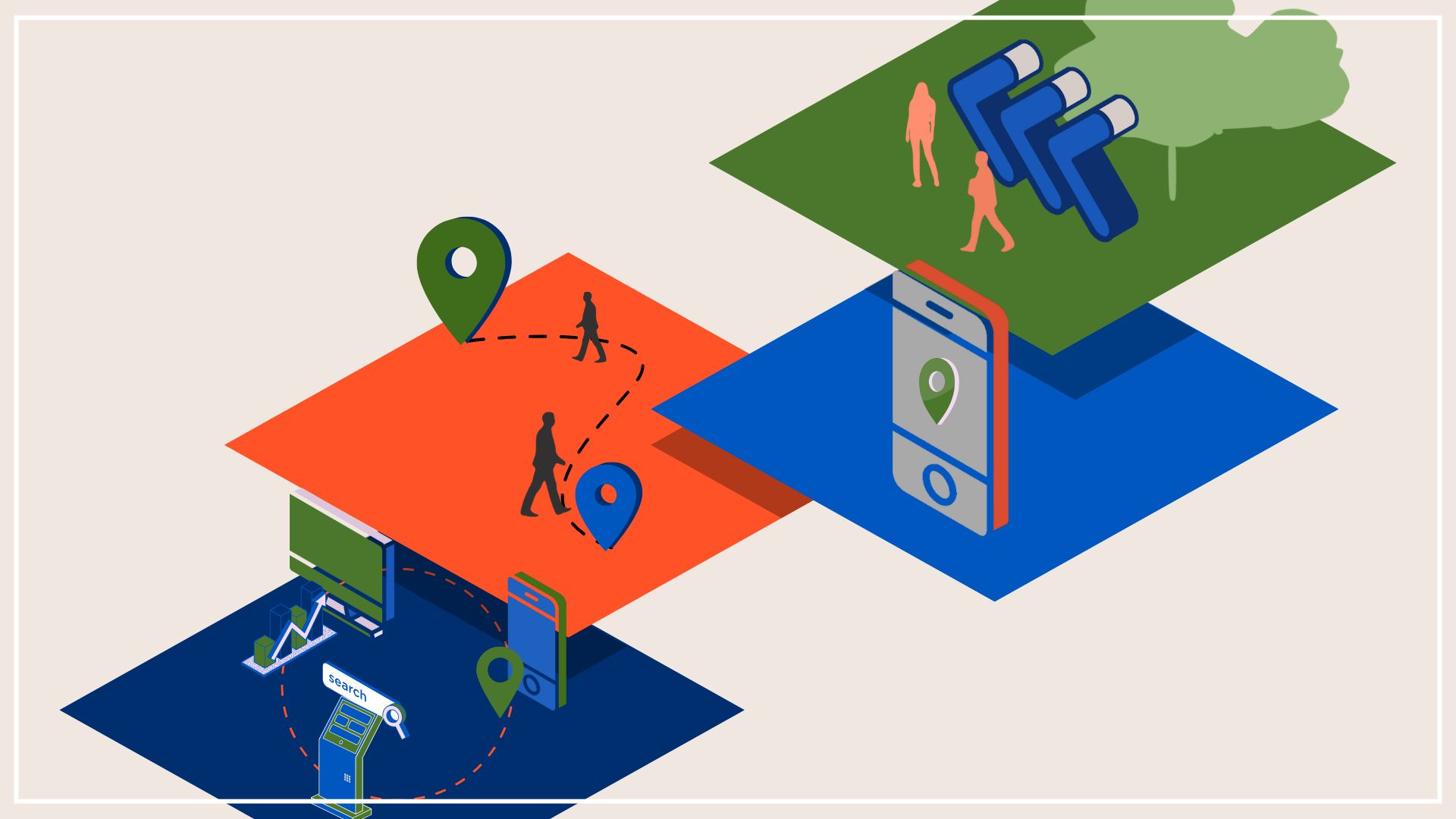
Source: Noble archives
Stand in any busy plaza, museum lobby, or concourse and the story is the same: crowds moving, decisions happening, friction rising or falling. Behind all of it sits one essential question: How do we turn these everyday movements into insight that actually guides the business?
To get there, all four layers of modern wayfinding need to work together. Here’s what those layers are revealing this season.
1. Physical Signals
Even in digital-first environments, physical cues remain the backbone of navigation. A TOD sign-system study shows that improvements in visibility, angle, and hierarchy significantly boost orientation speed in high-complexity spaces.
In the mixed-use and cultural places we work in, spatial data often surfaces the same friction points: hesitation zones, confusing intersections, or entry sequences that repeatedly stall visitors. Physical clarity remains the first lever in reducing operational and experiential friction.
2. Digital Guidance
Digital tools step in where physical signage hits its limits. QR-triggered maps, kiosks, mobile routing, and real-time detours can flex with crowd changes, construction, and seasonal overlays in ways static signs can’t. Industry reports show airports, malls, and healthcare campuses leaning heavily into digital wayfinding to reduce strain and boost throughput.
Across our projects, digital guidance becomes the connective tissue between daily operations and visitor intent; revealing top search terms, missed POIs, and the routes that most consistently trigger re-routing.
3. Behavioral Cues
People reveal the truth of a space long before a sensor does. They cut corners, cluster in intuitive spots, avoid ambiguous corridors, and carve out “desire paths” that challenge the planned circulation. Retail heatmap analytics now make these patterns visible at scale, highlighting where attention spikes, where movement slows, and where layouts work against intuition.
For partners across mixed-use districts, culture, and mobility, these behavioral cues answer bigger strategic questions:
Where does programming naturally belong? Which pathways feel natural, and which feel like work?
4. The Spatial Data Loop
All of this (physical signals, digital guidance, and behavioral patterns) feeds into the loop that lets places learn. Research shows computer-vision heatmaps and sensor-driven analytics can optimize staffing, layouts, merchandising, and signage dynamically, especially in retail and high-traffic environments.
For our partners, this loop becomes the engine behind bigger decisions:
Where to invest in infrastructure
Which routes to redesign
How seasonal overlays affect flow
Where visibility or staffing needs to shift
Wayfinding isn’t just about helping people move. It’s about giving organizations a clearer view of how their spaces perform.
Noble View
The most meaningful insights don’t come from any single layer of a space, but from the moment they work together; physical cues, digital tools, human behavior, and data all inform each other. That’s when movement becomes intelligence, not noise.
For organizations, the advantage is clear: when you build a system that can truly see its own patterns, you unlock better decisions, stronger operations, and environments that adapt in real time.
In The Lab: What’s In Noble’s Workshop This Season
The holidays always push people indoors: into lobbies, galleries, arenas, and transit halls that suddenly feel a size too small. It’s the perfect moment to focus on the quiet tools that help spaces stay clear, confident, and navigable. Here’s what we’ve been up to.
Rockefeller Center Digital Map
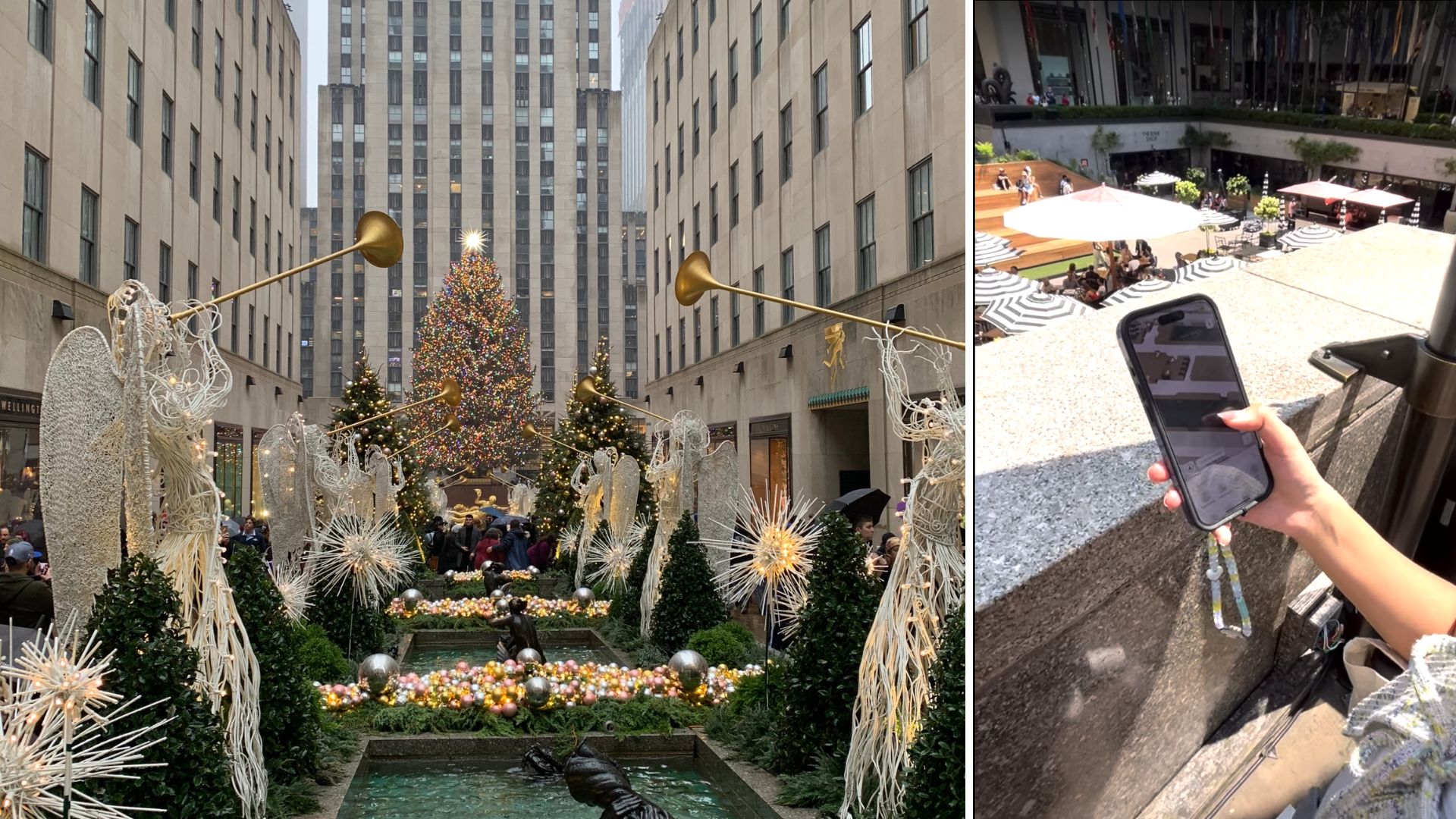
Image credit: Getty Images, Noble archives
Rockefeller Center is one of the most visited destinations in New York, especially this time of year. This month we've helped them roll out its new digital map built for exactly this moment. We’re seeing what visitors search, where they click, which destinations rise to the top, and where people run into dead ends. Daily interaction spikes, top-searched destinations, and even unsuccessful queries give us a clearer picture of what guests are trying to find when the campus is at full capacity. It’s a rare look at holiday behavior in real time; insight that will help shape how the map evolves as millions move through the center in the weeks ahead.
Partnering with PAM: Smarter Navigation for Venues
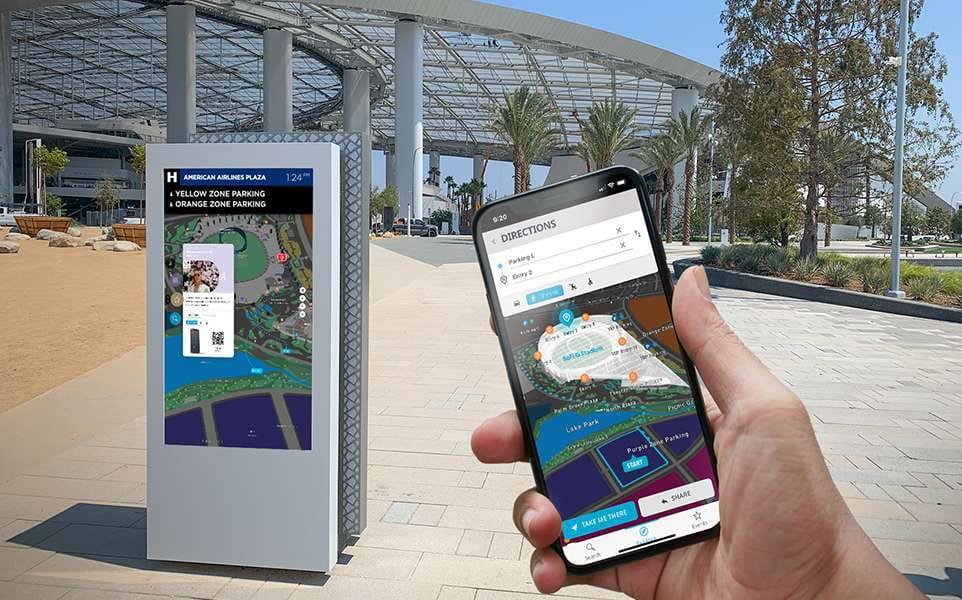
Image credit: Source: PAM / SOFI Stadium
This year we deepened our partnership with PAM, whose digital wayfinding platform is powering some of the world’s most complex entertainment venues; from stadiums and arenas to large-scale event districts. Their tools help operators keep information consistent across signs, screens, and mobile, even as events stack, crowds surge, and layouts shift. Working alongside their team gives us a front-row view into how major venues are modernizing navigation at scale, especially as live entertainment continues to draw massive, fast-moving audiences.
Saint Louis Art Museum (SLAM)
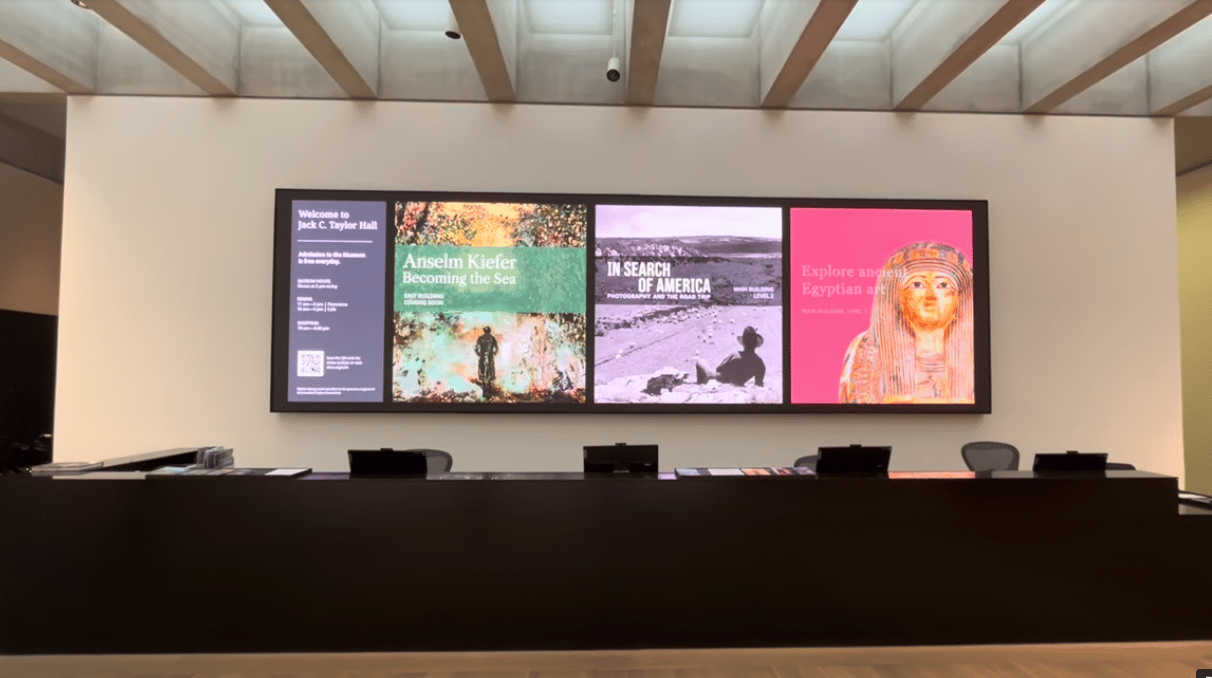
Image credit: Noble archives
At the Saint Louis Art Museum, we’ve been helping make a monumental space feel more human and navigable; using digital tools that respect and harmonize with the museum’s existing wayfinding system. By surfacing the right information at the right moment, the new experiences help visitors who might normally feel lost or intimidated instead learn something new, discover a gallery they’ve never seen, or find a reason to go deeper; whether that’s becoming a member, coming back for programs, or getting involved through volunteering and advocacy in the wider community. This work has felt especially meaningful in a year when the St. Louis region has been hit by severe tornadoes; watching the community come together, and seeing how art and culture can anchor people, has reinforced why thoughtful, welcoming public spaces matter so much.
Looking Ahead
As we wrap the year, we’re thinking a lot about how people move through places when everything feels busiest. And we’re not done learning. Our team just returned from IAAPA, DSE, MAMM and Urban X Summit, where we gathered a fresh wave of insights on guest flow, attraction design, and next-generation wayfinding. Keep a lookout for this in an upcoming article.
And next month, we’re closing out the year with something special: a “Digital Experiences Wrapped” for 2025; the highs, the stumbles, and what these signals tell us about the experiences we’ll all be designing for in 2026.
Thanks for reading. If this sparked ideas, questions, or critiques, we’d love to hear from you. Noble is committed to partnering at a system level – if your culture or civic organization is tackling similar challenges, we’d love to chat. From innovation sprints to full-scale implementations, we help translate big ideas into practical solutions.
Until next time,
Fadila and The Noble Team